
Author: Near Me Dental Team
We are a team of talented individuals that take creativity to a new level. We are not just another creative agency, we dream with you. We’re really passionate about our work and we love to turn visions into reality. Our goal is not only to satisfy our clients’ goals, but to exceed them in every way.
The moment the lead apron comes out, it’s common to feel a flicker of concern. The word “radiation” can sound intimidating, leaving many patients wondering if dental X-rays are truly safe and necessary. You might ask yourself, “Do I really need these every year?” The short answer is yes—and they are safer than you might think. This guide will explain why dental X-rays are one of the most important diagnostic tools in modern dentistry, break down the different types, and address the crucial topic of radiation safety.
What Are Dental X-Rays and Why Are They Essential?
Dental X-rays, also known as radiographs, are images that allow your dentist to see what’s happening beneath the surface of your teeth and gums. A visual exam alone only shows part of the picture. X-rays are the only way to detect hidden problems before they become serious and painful.
What Can Dental X-Rays Reveal?
- Cavities between teeth that aren’t visible to the naked eye.
- Decay beneath existing fillings or crowns.
- Bone loss in the jaw, often a sign of advanced gum disease.
- Impacted teeth, such as wisdom teeth that are trapped below the gumline.
- Abscesses (infections) at the root of a tooth.
- Cysts and some types of tumors.
Common Types of Dental X-Rays
Your dentist may recommend different types of X-rays depending on your needs. The most common include:
- Bitewing X-Rays: These are the most common type taken during a routine dental check-up. You bite down on a small device, and the X-ray captures a view of your upper and lower back teeth, helping to detect decay between them.
- Periapical X-Rays: This type shows the entire tooth, from the crown down to the tip of the root. It’s used to diagnose problems with a specific tooth, such as a suspected root issue that might require an endodontist.
- Panoramic X-Ray: This is a single image that captures your entire mouth in one shot—all teeth, upper and lower jaws, and surrounding structures. A panoramic x-ray is often used to plan for treatments like braces, implants, or wisdom tooth extractions performed by an oral surgeon.
The Critical Question: What About Radiation Safety?
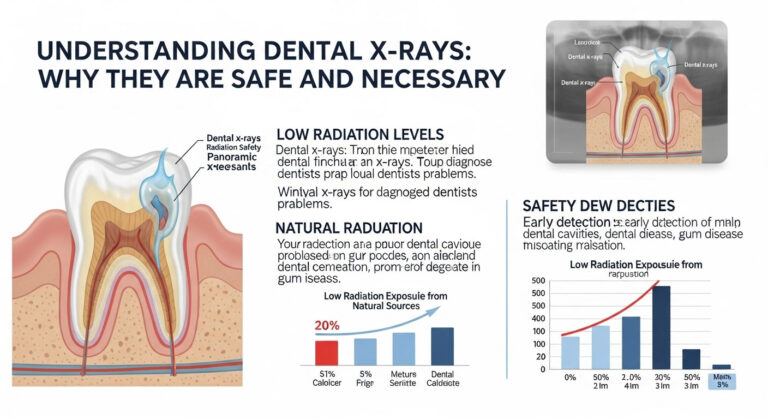
This is the number one concern for most patients, and it’s a valid one. However, it’s essential to put the radiation dose into perspective. Thanks to modern technology, the amount of radiation you receive from dental X-rays is extremely small. In fact, as the Environmental Protection Agency (EPA) notes, you receive more radiation from natural background sources (like the sun and soil) in a single day than you do from a typical set of bitewing X-rays.
Modern dental offices use digital X-rays, which reduce radiation exposure by up to 90% compared to old film-based X-rays. Furthermore, the lead apron and thyroid collar are always used as an extra precaution to protect the rest of your body.
Conclusion: A Necessary Tool for a Healthy Smile
Dental X-rays are a safe, necessary, and invaluable part of preventive dental care. They provide your dentist with the crucial information needed to diagnose problems early, saving you from more complex, costly, and painful treatments down the road. The minimal radiation exposure is a tiny price to pay for the immense benefit of maintaining your long-term oral health.
Have questions about your own dental X-ray schedule? The best approach is a personalized one. Use the Near Me Dental search tool to find a top-rated dentist in your area and discuss your preventive care plan today.