
Author: Near Me Dental Team
We are a team of talented individuals that take creativity to a new level. We are not just another creative agency, we dream with you. We’re really passionate about our work and we love to turn visions into reality. Our goal is not only to satisfy our clients’ goals, but to exceed them in every way.
You’ve done it all. You brush for a full two minutes, you diligently floss every single night, and you might even finish with a swirl of mouthwash. Yet, when you wake up, you’re greeted with that familiar, not-so-fresh “morning breath,” and a quick look in the mirror reveals a whitish or yellowish film coating your tongue. It can be incredibly frustrating to feel like your mouth isn’t truly clean, despite your best efforts.
If this sounds familiar, you may be overlooking one of the most ancient, simple, and surprisingly effective steps in oral care. The problem isn’t just your teeth and gums; it’s your tongue. And the solution could be a small, unassuming tool that’s been used for centuries: the tongue scraper.
This ultimate guide is designed to be your one-stop resource for everything you need to know. We will dive deep into the science behind the tongue scraper benefits, provide a step-by-step tutorial on how to use a tongue scraper correctly, compare it to traditional tongue brushing, and help you choose the perfect tool to revolutionize your oral hygiene routine. Get ready to uncover the missing piece in your quest for a truly clean and healthy mouth.
What is Tongue Scraping and Why Does Your Tongue Need Cleaning?
Before we can appreciate the solution, we need to understand the problem. While smooth in appearance, your tongue is a complex and textured organ that plays a central role in your oral ecosystem, for better or for worse.
The Anatomy of Your Tongue: A Perfect Home for Bacteria
Your tongue’s surface is not a smooth slide; it’s more like a deep-pile shag carpet. It’s covered in tiny bumps and grooves known as papillae (which also contain your taste buds). These countless nooks and crannies create the perfect environment for microscopic particles to become trapped.
Over the course of a day, this “carpet” accumulates a buildup consisting of:
- Bacteria: Billions of microorganisms, both good and bad, make their home here.
- Food Debris: Tiny particles from everything you eat and drink get lodged in the grooves.
- Dead Cells: Your mouth, like the rest of your body, is constantly shedding dead cells.
- Post-Nasal Drip: Mucus from your sinuses can also settle on the back of the tongue.
This combination forms a visible biofilm known as the “tongue coating.” When left undisturbed, it becomes a breeding ground for odor-causing bacteria and can contribute to a host of oral health issues.
Introducing the Tongue Scraper: An Ancient Tool for Modern Hygiene
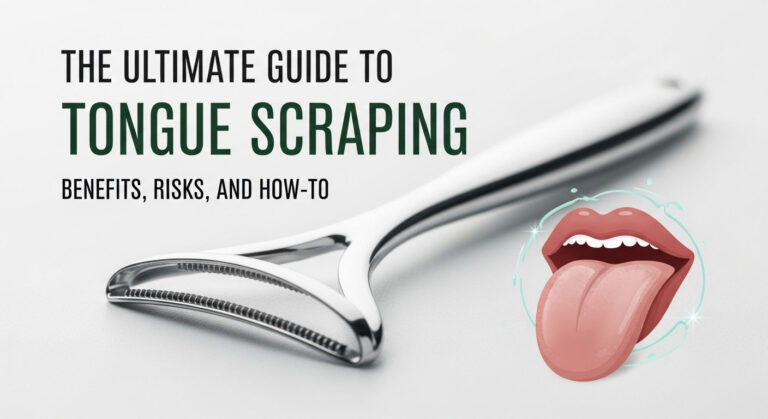
Tongue scraping is the simple practice of using a specially designed tool to gently remove this biofilm from the surface of the tongue. It’s not a new-age fad; in fact, it’s an ancient self-care ritual with deep roots in history. In Ayurvedic medicine from India, the practice is known as Jihwa Prakshalana and is considered a vital daily routine for removing toxins (ama) and maintaining health. Evidence of tongue cleaning practices has also been found in ancient European and Asian cultures, recognized for centuries as a key to fresh breath and overall wellness.
The core concept is brilliantly simple: while a toothbrush is designed to clean the hard, smooth surfaces of your teeth, a tongue scraper is engineered specifically for the soft, textured surface of your tongue. It uses a gentle, bladed edge to physically lift and remove the coating in a way that brushing simply cannot match.
The Science-Backed Benefits of Tongue Scraping
While rooted in ancient tradition, the benefits of tongue scraping are now well-documented by modern dental science. Adding this simple, 30-second step to your routine can have a profound impact on your oral health and overall well-being.
Benefit 1: A Powerful Weapon Against Bad Breath (Halitosis)
This is, without a doubt, the most immediate and noticeable benefit. The overwhelming majority of bad breath cases—estimated to be as high as 80-90%—originate not from the teeth, but from bacteria on the tongue.
These specific anaerobic bacteria thrive in the low-oxygen environment of the tongue’s deep fissures. As they break down proteins from food debris and dead cells, they release smelly gases called Volatile Sulfur Compounds (VSCs). These VSCs (like hydrogen sulfide and methyl mercaptan) are responsible for that distinct “rotten egg” or sulfurous odor of bad breath. Tongue scraping directly tackles the problem at its source by physically removing the bacteria-laden coating. Studies have consistently shown that tongue scraping is significantly more effective at reducing VSCs than brushing the tongue with a toothbrush.
Benefit 2: Enhancing Your Sense of Taste
Have you ever felt that your food tastes a bit bland or that flavors seem muted? The culprit might be the thick coating on your tongue. This biofilm can act as a physical barrier, covering your taste buds and preventing them from making full contact with your food. Think of it like trying to appreciate a fine painting while looking through a dirty window.
By scraping this layer away, you expose your taste buds, allowing for a clearer and more intense taste experience. Many people who start tongue scraping report that they can better distinguish the subtle sweet, salty, sour, and bitter notes in their food, leading to greater enjoyment of meals and potentially helping to curb cravings for overly salty or sugary foods.
Benefit 3: Improving the Appearance of Your Tongue
A healthy tongue should be a uniform, pinkish color. A thick white, yellow, or even brownish coating can be visually unappealing and is often mistaken for a sign of illness. In most cases, it’s simply the result of a buildup of the biofilm we’ve discussed. Regular tongue scraping removes this discoloration, restoring your tongue to its natural, healthy pink state. This not only looks better but also gives you a clear visual indicator of your oral cleanliness each morning.
Benefit 4: Contributing to Better Overall Oral Health
Your mouth is a dynamic ecosystem. The bacteria living on your tongue don’t stay put; they are constantly circulating throughout your oral cavity. The same bacteria that cause bad breath are also implicated in the formation of dental plaque, which leads to cavities and gum disease (gingivitis and periodontitis).
By dramatically reducing the overall bacterial load on your tongue, you create a healthier oral environment. There are fewer harmful bacteria available to migrate to your teeth and gums, which can help support the hard work you’re doing with your toothbrush and floss. It’s a holistic approach to reducing the total number of pathogens in your mouth.
Benefit 5: The Mind-Body Connection and a Feeling of Cleanliness
Beyond the physical benefits, incorporating tongue scraping into your morning routine can become a powerful mindfulness practice. It takes only a few seconds, but it encourages you to connect with your body and start your day with an intentional act of self-care. The immediate feedback—seeing the coating removed from the scraper—provides a gratifying sense of accomplishment and a level of oral freshness that brushing alone can’t achieve. This ritual can set a positive tone for your day and reinforce your commitment to your overall health.
How to Use a Tongue Scraper: A Step-by-Step Practical Guide
Adopting this new habit is incredibly easy. The key is to use the correct technique to maximize benefits and avoid any discomfort. Follow these simple steps to become a pro in no time.
Step 1: Timing is Everything – When to Scrape
The ideal time to scrape your tongue is first thing in the morning, immediately upon waking up. This is because bacteria have been multiplying in your mouth all night, and the tongue coating is often at its thickest. Scraping before you even drink water ensures you are removing these toxins and bacteria before they are reabsorbed or swallowed. An alternative, which is still effective, is to make it the final step of your oral hygiene routine after brushing and flossing.
Step 2: The Technique – Gentle and Effective
Here is a detailed breakdown of the proper scraping method:
- Find Your Position: Stand comfortably in front of a mirror so you can see what you’re doing.
- Stick Out Your Tongue: Open your mouth wide and extend your tongue as far as is comfortable. This flattens the surface and makes it easier to access the back.
- Place the Scraper: Take your tongue scraper and place the curved edge as far back on your tongue as you can comfortably go without initiating your gag reflex. For most people, this is around the middle of the tongue to start.
- Apply Gentle Pressure: Lightly press the scraper onto the surface of your tongue. The pressure should be firm enough to remove the coating but gentle enough that it causes no pain. This is the most important part of the technique.
- Pull Forward in One Motion: In one long, smooth stroke, pull the scraper from the back of your tongue to the very tip. Do not push it back and forth.
- Clean the Scraper: You will see the milky-white or yellowish residue on the edge of the scraper. Rinse this off with tap water or wipe it away with a tissue.
- Repeat and Cover All Areas: Repeat the scraping motion 3 to 5 times. After the first one or two passes down the middle, you can slightly angle the scraper to clean the sides of your tongue as well.
- Final Rinse: Once you are finished, rinse your mouth thoroughly with water to wash away any remaining loose debris.
- Clean Your Tool: Thoroughly wash your tongue scraper with hot water and soap. Let it air dry completely and store it in a clean, dry place.
Pro-Tips for a Better Experience
- Managing the Gag Reflex: If you have a sensitive gag reflex, start from the middle of your tongue and gradually, over several days, try to place the scraper a little further back. Exhaling slowly as you pull the scraper forward can also help to suppress the reflex.
- Listen to Your Body: Tongue scraping should never be painful. If you feel any pain or see any bleeding, you are pressing too hard. Lighten up the pressure significantly.
Choosing the Best Tongue Scraper: A Buyer’s Guide
A quick search online reveals a dizzying array of tongue scrapers. They come in different materials, shapes, and sizes. Let’s break down the options to help you find the perfect one for your needs.
Material Matters: Metal vs. Plastic
The material of your scraper is the most significant factor, affecting its durability, hygiene, and feel.
Metal Scrapers (Copper and Stainless Steel)
Metal scrapers are the traditional choice and are favored by many for their longevity and hygienic properties.
- Copper Scrapers:
- Pros: Copper is naturally antimicrobial and has been prized in Ayurvedic tradition for this reason. They are sturdy and effective.
- Cons: Copper can tarnish over time and will require occasional cleaning with lemon juice or vinegar to maintain its luster. Some users report a slight metallic taste.
- Stainless Steel Scrapers:
- Pros: This is often considered the gold standard. Stainless steel is incredibly durable, will not rust or tarnish, is easy to sterilize (you can even boil it), and has no taste. It provides a firm, effective scrape.
- Cons: The initial cost is typically higher than plastic.
Plastic Scrapers
- Pros: They are very inexpensive and widely available in drugstores. The softer, more flexible material can feel gentler, which makes them a good option for absolute beginners or those with a very sensitive tongue.
- Cons: Plastic is porous and can harbor bacteria if not cleaned meticulously. They are less durable and need to be replaced every 3-4 months, similar to a toothbrush, making them less eco-friendly in the long run.
Shape and Design: U-Shape vs. Y-Shape vs. Ridged Brushes
The shape of the tool can affect how it feels and functions in your mouth.
- U-Shaped Scrapers: This is the classic, wide, two-handled design. It’s excellent for covering the entire width of the tongue in a single pass. Most metal scrapers come in this shape.
- Y-Shaped (or V-Shaped) Scrapers: These typically have a single handle and a narrower head. Some people find this design easier to control and maneuver, especially if they have a smaller mouth or a more sensitive gag reflex. Most plastic scrapers use this design.
- Tongue Brushes/Scrapers with Ridges: These hybrid tools often feature a scraper edge on one side and short, soft bristles or ridges on the other. The idea is to first brush the tongue to loosen debris and then scrape it away. While effective, they can be more difficult to keep completely clean than a simple, smooth scraper.
Our Recommendation for Beginners and Veterans
- For Beginners: Starting with an inexpensive Y-shaped plastic scraper is a low-risk way to try the practice. If you prefer a more durable option, a stainless steel Y-shaped scraper is also an excellent choice.
- For Long-Term Use: A high-quality, U-shaped stainless steel tongue scraper is the top recommendation. It is the most durable, hygienic, and effective option that will last for many years with proper care.
Tongue Scraping vs. Tongue Brushing: Which is More Effective?
This is one of the most common questions in oral hygiene. Many people simply use their toothbrush to give their tongue a quick scrub. Is that good enough, or does a dedicated scraper truly make a difference?
The Case for Brushing Your Tongue
Let’s be clear: brushing your tongue is far better than doing nothing at all. It’s accessible because you already have the tool in your hand, and the bristles can certainly dislodge some of the loose debris and bacteria from your tongue’s surface.
The Limitations of Brushing
However, using a toothbrush on your tongue has significant limitations. The design of toothbrush bristles is meant for cleaning hard enamel, not soft tissue. When used on the tongue, it often acts more like a rake than a squeegee; it can move the biofilm around rather than effectively lifting and removing it from the mouth. Furthermore, the bulky head of a toothbrush is more likely to trigger a gag reflex, preventing you from cleaning the crucial back portion of the tongue where most odor-causing bacteria reside.
Why Scraping Has the Clear Edge
A tongue scraper is a purpose-built tool. Its smooth, beveled edge is designed to glide over the tongue’s surface and “shave” off the coating, collecting it for easy removal. Multiple scientific studies have compared the two methods head-to-head. The consensus is clear: tongue scrapers are demonstrably more effective at reducing the amount of tongue coating and the concentration of odor-causing Volatile Sulfur Compounds (VSCs).
The Verdict: Can You Do Both?
Yes, and this may be the ultimate technique. Some oral hygiene enthusiasts advocate for gently brushing the tongue first with a soft-bristled brush to loosen the biofilm, and then following up with a scraper to thoroughly remove it. However, if you are only going to do one, the evidence strongly supports that scraping provides a superior clean.
Potential Risks and Common Mistakes to Avoid
Tongue scraping is an overwhelmingly safe practice, but like any routine, it’s important to do it correctly to avoid potential issues. The risks are minimal and almost always caused by user error.
Is Tongue Scraping Safe? A Look at the Risks
- Gagging: This is the most common and harmless side effect. It can be easily managed by starting mid-tongue and not forcing the scraper too far back too soon.
- Applying Too Much Pressure: This is the biggest mistake to avoid. Aggressive scraping can irritate or even cut the delicate surface of your tongue. Remember, the goal is a gentle glide, not a forceful scrub.
- Scraping Over Sores: If you have canker sores, cuts, or any other type of lesion on your tongue, avoid scraping that area until it has fully healed to prevent further irritation.
- Using a Dirty Tool: A scraper is designed to remove bacteria. If you don’t clean it properly after each use, you risk reintroducing those same germs back into your mouth.
Frequently Asked Questions (FAQ) About Tongue Scraping
Here are answers to some of the most common questions people have when starting their tongue scraping journey.
- How often should I scrape my tongue?
- For best results, scrape your tongue once or twice daily. Once in the morning is essential; a second time before bed is a great bonus.
- Will tongue scraping cure my bad breath forever?
- It is an extremely effective tool for managing bad breath caused by tongue bacteria. However, if your halitosis persists despite excellent oral hygiene, it could be a sign of a deeper issue like gum disease, a cavity, or a non-oral medical condition, which requires a dentist’s diagnosis.
- My tongue is bleeding when I scrape. What am I doing wrong?
- You are pressing too hard. Bleeding is a definitive sign of excessive force. Stop immediately, allow the area to heal for a day or two, and when you resume, use about half the pressure you were using before.
- Can kids use a tongue scraper?
- Yes, children can benefit from tongue scraping, but they should be supervised until they have mastered the gentle technique. It’s best to start with a smaller plastic scraper. This is a great topic to discuss with a pediatric dentist at their next check-up.
- When should I replace my tongue scraper?
- If you use a plastic scraper, replace it every 3-4 months, just like a toothbrush. If you have a copper or stainless steel scraper, it can last for many years, if not a lifetime, with proper care.
- What if my tongue coating comes back very quickly?
- A persistent, thick coating that returns almost immediately after cleaning can sometimes indicate an underlying issue such as significant dry mouth, a diet very high in processed foods, or a systemic issue like a yeast infection (oral thrush). This is a strong signal that it’s time to book a professional consultation.
When to See a Dentist About Your Tongue
While tongue scraping is a fantastic hygiene tool, it is not a medical treatment. Your tongue can provide important clues about your overall health, and certain changes warrant a professional evaluation.
When Your Tongue Is Sending an SOS Signal
Book an appointment with your dentist if you notice any of the following:
- A very thick, white, cottage cheese-like coating that cannot be scraped off (a potential sign of oral thrush).
- Any new or unusual lumps, bumps, or sores on your tongue that do not heal within two weeks.
- Patches on your tongue that are bright red and smooth (“geographic tongue”) or have a dark, hairy appearance (“hairy tongue”).
- A burning sensation or persistent pain on your tongue.
- Severe and persistent bad breath that does not improve with a comprehensive oral hygiene routine, including tongue scraping.
A consultation with a trusted dentist at a well-regarded dental clinic is your first and most important step. They can accurately diagnose the issue. If they suspect a more complex problem, they can provide a referral to an oral surgeon or another medical specialist for further care.
The Broader Context: Oral Hygiene as a Pillar of Overall Health
It’s crucial to remember that the health of your mouth is intrinsically linked to the health of your entire body—a concept known as the oral-systemic link. Chronic inflammation and high bacterial loads in the mouth are associated with an increased risk for serious systemic conditions like heart disease, diabetes, and respiratory infections.
As confirmed by the American Dental Association (ADA), maintaining good oral hygiene is a key component of a healthy lifestyle. By adding tongue scraping to your routine, you are taking one more simple, proactive step to reduce harmful bacteria and support not just your mouth, but your whole body.
Conclusion: Your Path to a Truly Cleaner Mouth
Tongue scraping is far more than an ancient ritual; it is a simple, science-backed practice that can fundamentally change your perception of a clean mouth. By physically removing the bacterial biofilm from your tongue, you can effectively combat bad breath, enhance your sense of taste, and lower the overall bacterial load in your mouth.
Remember that it is a powerful supplement to, but never a replacement for, the essential pillars of brushing and flossing. When combined, these practices create a comprehensive defense against the most common oral health problems.
Ready to take your oral hygiene to the next level and experience a new standard of clean? While tongue scraping is a fantastic at-home tool, nothing replaces the value of a professional cleaning and examination. Use the Near Me Dental search tool to find a top-rated, compassionate dentist in your area and schedule your appointment today!