
Author: Near Me Dental Team
We are a team of talented individuals that take creativity to a new level. We are not just another creative agency, we dream with you. We’re really passionate about our work and we love to turn visions into reality. Our goal is not only to satisfy our clients’ goals, but to exceed them in every way.
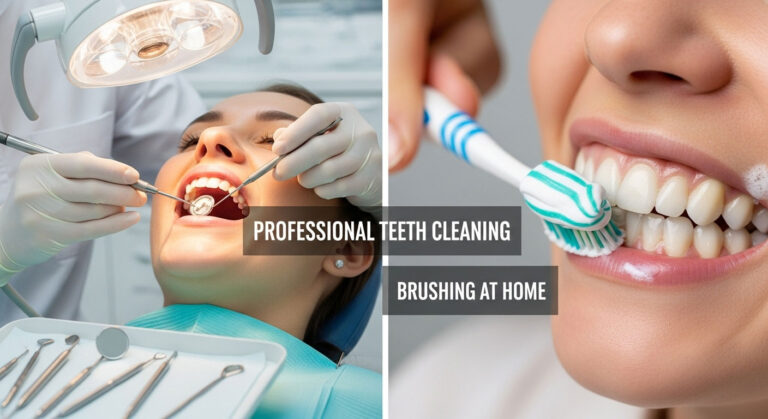
You’re diligent. You brush for two minutes, twice a day. You’ve mastered the art of flossing. You might even use a tongue scraper and a therapeutic mouthwash. So when your six-month dental reminder pops up, it’s easy to think, “Do I really need this? I take great care of my teeth at home.” It’s a logical question that many people ask, often viewing a professional cleaning as an optional add-on rather than an essential part of their healthcare.
The truth is, your daily home care routine is your essential first line of defense, but it’s only fighting half the battle. There is a stubborn, resilient enemy lurking in your mouth that your toothbrush and floss are powerless against. This enemy can silently lead to cavities, gum disease, and even affect your overall health.
This comprehensive guide will pull back the curtain on the professional teeth cleaning process. We will dive deep into the critical difference between plaque vs tartar, demystify the tools and techniques your hygienist uses, explain exactly what is dental scaling, and prove why that bi-annual visit is one of the most important investments you can make in your long-term health. By the end, you will not only understand what happens in that chair but will appreciate it as a vital health procedure you simply cannot replicate at home.
The Real Enemy: Understanding Plaque vs. Tartar
To truly grasp the value of a professional cleaning, we must first understand the two distinct adversaries in the fight for oral health: plaque and tartar. While often used interchangeably, they are fundamentally different in their nature, their danger, and how they must be removed.
Meet Plaque: The Soft, Sticky Invader You Fight Daily
Imagine the soft, “fuzzy” feeling on your teeth when you first wake up. That is dental plaque. It’s a colorless or pale-yellow biofilm that is constantly forming on your teeth.
What Exactly Is Plaque?
Plaque is a living, sticky community made up of several components:
- Bacteria: Your mouth is home to hundreds of species of bacteria. Plaque is the structure they build to live in.
- Food Debris: Sugars and starches from your diet are the primary food source for these bacteria.
- Saliva: Proteins from your saliva help form the sticky matrix of the biofilm.
- Bacterial Waste Products: As bacteria consume sugars, they produce acids as a byproduct.
Why Is Plaque Harmful?
This soft film is the root cause of the most common dental problems. The acids produced by the bacteria eat away at your tooth’s protective enamel layer, leading directly to cavities (tooth decay). Furthermore, the bacteria in plaque release toxins that irritate your gum tissue, causing inflammation, redness, and bleeding—the classic signs of gingivitis, the earliest stage of gum disease.
The Good News About Plaque
You have complete control over plaque. Because it is soft and sticky, plaque can be effectively removed with proper daily brushing and flossing. This is the entire purpose of your at-home oral hygiene routine.
Meet Tartar (Calculus): Plaque’s Hardened, Destructive Form
Now, what happens to the plaque you inevitably miss? Even the most diligent brusher and flosser cannot remove 100% of plaque, especially in hard-to-reach areas like between the teeth, in deep grooves, or just below the gumline. When plaque is allowed to sit undisturbed, it undergoes a dramatic transformation.
How Plaque Becomes Tartar
Your saliva is rich in minerals like calcium and phosphate, which are meant to help strengthen your teeth. However, these same minerals interact with the lingering plaque. Over time, the plaque absorbs these minerals and hardens, or calcifies, into a substance called dental calculus, more commonly known as tartar.
Think of it this way: plaque is like wet cement, and tartar is like that cement after it has fully hardened. This hardening process can begin in as little as 24 to 48 hours.
The Two Types of Tartar
Tartar isn’t a single entity. It forms in two distinct locations, with the subgingival type being far more dangerous.
- Supragingival Calculus: This is tartar that forms *above* the gumline. It’s the type you might be able to see or feel. It is typically yellowish or tan in color and is most commonly found near salivary gland openings, such as behind the lower front teeth and on the outside of the upper molars.
- Subgingival Calculus: This is tartar that forms *below* the gumline, in the small space (or pocket) between the tooth and the gum. It is often dark brown or greenish-black because it is stained by blood products from inflamed gums. This is the truly insidious form of tartar because it is invisible to you and directly responsible for the progression of gum disease.
The Bad News About Tartar
You cannot remove tartar at home. Once plaque has hardened into calculus, it forms a tenacious bond to the tooth surface that is impervious to a toothbrush, floss, or any over-the-counter tool. It requires professional instruments and a trained hand to remove it safely and effectively. Trying to scrape it off yourself can severely damage your tooth enamel and gum tissue.
What Happens During a Professional Teeth Cleaning? The Complete Walkthrough
Now that we’ve established tartar as the villain that only a professional can defeat, let’s walk through exactly what happens during a routine cleaning, officially known as a dental prophylaxis. This is a systematic, multi-step process designed to reset your oral health to a clean slate.
Step 1: The Professional Assessment
Your cleaning doesn’t begin the moment you sit down. A great dental hygienist starts with a thorough assessment. They will:
- Review Your Medical History: They’ll ask about any changes in your health, medications, or allergies. Conditions like diabetes or medications that cause dry mouth can directly impact your oral health.
- Perform a Visual Exam: They will use a small mirror and a bright light to examine each tooth, your gums, tongue, and cheeks, looking for any obvious issues like cavities, inflamed gums, or suspicious spots.
- Periodontal Charting: They may use a tiny probe with millimeter markings to gently measure the depth of the pockets around your teeth. Healthy pockets are typically 1-3mm deep. Deeper pockets can indicate gum disease.
This initial step is crucial for customizing the cleaning to your specific needs.
Step 2: The Main Event – Dental Scaling for Tartar Removal
This is the core of the professional cleaning and the part you cannot replicate. Dental scaling is the meticulous process of removing all tartar and plaque from the tooth surfaces.
The Hygienist’s Specialized Toolkit
Your hygienist will use a combination of two types of instruments:
1. Ultrasonic Scalers
You’ll know this tool by its high-pitched humming sound and the fine mist of water it sprays. An ultrasonic scaler is a sophisticated instrument with a vibrating tip that moves at thousands of vibrations per second. This technology offers several benefits:
- Efficiency: The vibrations effectively break up and dislodge large deposits of tartar without the need for heavy force.
- Cavitation: The water spray, called lavage, is crucial. As the tip vibrates, it creates tiny, oxygen-filled bubbles in the water that collapse and release a shockwave. This action helps to kill the anaerobic bacteria that cause gum disease.
- Flushing Action: The constant stream of water flushes away the dislodged tartar and bacteria, keeping the area clean as the hygienist works.
2. Hand Instruments (Scalers and Curettes)
After the bulk of the tartar is removed with the ultrasonic scaler, your hygienist will switch to finely crafted hand instruments. These are what people often associate with the “scraping” part of a cleaning. They are made of high-grade stainless steel and come in various shapes and sizes, each designed for a specific area of the mouth or tooth surface.
- Scalers: Have a pointed tip and are primarily used to remove tartar *above* the gumline.
- Curettes: Have a rounded tip and are designed to be used both above and *just below* the gumline, gently reaching into the shallow pocket to remove tartar without damaging the soft tissue.
The use of hand instruments allows for incredible precision and a tactile sense that lets the hygienist feel for any remaining roughness or small deposits, ensuring the tooth surface is perfectly smooth.
Step 3: Polishing for a Smooth Finish
Once your teeth are completely free of tartar, the next step is polishing, sometimes called coronal polishing. The hygienist uses a slow-speed handpiece with a soft, rotating rubber cup and a special gritty paste called prophylaxis (prophy) paste.
The Dual Purpose of Polishing
- Stain Removal: The gentle abrasive in the prophy paste is excellent at removing surface stains from coffee, tea, wine, and tobacco, leaving your teeth looking brighter and feeling incredibly smooth.
- Plaque Prevention: This is the more important health benefit. By smoothing out any microscopic imperfections on the tooth surface, polishing makes it more difficult for new plaque to attach. A smooth surface is a clean surface.
Step 4: Professional Flossing and Final Rinse
Next, your hygienist will expertly floss between your teeth. This serves a few purposes: it removes any prophy paste that may have been pushed between the teeth, it ensures all the contact points are clear of any debris, and it serves as a final check for any lingering tartar near the gumline. They will then have you rinse thoroughly to wash everything away.
Step 5: Fluoride Treatment (A Protective Shield)
Often the final step, especially for children and adults prone to cavities, is a professional fluoride treatment. This is a much higher concentration of fluoride than you’ll find in your toothpaste or tap water. It is applied as a varnish, gel, or foam.
The fluoride is absorbed by your tooth enamel, where it works to:
- Remineralize Enamel: It helps to repair and strengthen areas of the tooth that have been weakened by acid attacks.
- Increase Acid Resistance: It makes the enamel more resistant to future acid attacks from plaque bacteria.
- Reduce Sensitivity: It can help to block the tiny tubules in exposed dentin, reducing tooth sensitivity.
Addressing Your Key Concerns: The Patient Experience
Understanding the procedure is one thing, but knowing what to expect emotionally and financially is just as important. Let’s tackle the most common patient questions.
Is a Professional Teeth Cleaning Painful?
This is the number one fear for many patients. For a person with a generally healthy mouth, a professional cleaning should be completely painless. You will feel sensations like vibrations from the ultrasonic scaler and light pressure from the hand instruments, but not pain.
Discomfort can arise under specific circumstances:
- If you have inflamed gums (gingivitis): Inflamed tissue is naturally more sensitive. The cleaning process in these areas might feel tender. The great news is that removing the tartar and plaque will allow the inflammation to heal, making your next cleaning much more comfortable.
- If you have gum recession: Exposed root surfaces are much more sensitive than enamel. Your hygienist will be extra careful in these areas.
- If you have heavy tartar buildup: Removing large, old deposits may require more time and pressure, which can cause some temporary sensitivity.
The most important thing is to communicate. If you feel any pain, tell your hygienist immediately. They can apply a topical numbing gel, adjust their technique, or take breaks to ensure you are comfortable.
Regular Cleaning vs. “Deep Cleaning”: What’s the Difference?
You may have heard of someone needing a “deep cleaning.” This is not the same as a regular prophylaxis and is a common point of confusion.
- A Regular Cleaning (Prophylaxis) is PREVENTIVE. It is performed on a patient with a healthy mouth or, at most, mild gingivitis. The focus is on removing tartar from above and just slightly below the gumline to prevent gum disease from starting or progressing.
- A Deep Cleaning (Scaling and Root Planing or SRP) is THERAPEUTIC. It is a treatment for patients who have active periodontal (gum) disease. In this case, the pockets between the teeth and gums are deeper, and there is tartar buildup far below the gumline on the root surfaces. SRP involves meticulously cleaning these deep pockets and smoothing the roots to help the gums reattach to the teeth. It is more intensive, often requires local anesthetic (numbing shots), and may be completed over two or more appointments.
Regular cleanings are what keep you from needing a deep cleaning.
Finding the Right Professional Team for Your Care
The quality of your professional cleaning and your comfort during the procedure depend entirely on the skill and compassion of your dental team. A great experience starts with finding a provider you trust.
Your regular cleaning is performed by a highly trained dental hygienist working under the supervision of your dentist. At a comprehensive dental clinic, they function as a seamless team, reviewing your health history, x-rays, and exam findings to create a personalized preventive plan for you. If you are a parent, finding a dedicated pediatric dentist is essential to ensure your child receives the same high-quality, comfortable preventive care in an environment designed just for them. This positive early experience can set the stage for a lifetime of good oral health habits.
The Expert Consensus: A Non-Negotiable Part of Health
The importance of professional cleanings is a universally accepted principle in healthcare. It is not a cosmetic luxury but a medical necessity for long-term health. The American Dental Association (ADA) and dentists worldwide emphasize that regular dental visits, which include a professional cleaning, are essential for removing tartar, which cannot be removed by brushing and flossing, and for preventing more serious and costly dental problems down the line.
Conclusion: The Ultimate Partnership for Your Oral Health
Your daily brushing and flossing routine is the crucial groundwork you lay every day. You are the hero of your oral health story, bravely fighting off the relentless daily assault of plaque. But every hero needs a powerful ally.
Your dental hygienist is that ally, armed with the specialized tools and expertise to defeat the one enemy you can’t conquer alone: hardened tartar. A professional teeth cleaning is not a repeat of what you do at home; it’s the essential other half of the equation. It’s the professional reset that clears away the calcified buildup, smooths the battlefield, and gives you a fresh start in your daily fight. By embracing this partnership, you are taking the most effective step possible toward ensuring a lifetime of healthy teeth and gums.
Ready to give your at-home efforts the professional backup they deserve? Don’t let plaque win the battle and harden into tartar. Use the Near Me Dental directory to find a top-rated, gentle, and thorough dental team in your area and schedule your essential professional cleaning today.