
Author: Customer Service NMD
When you settle into the dental chair for a routine dental check-up, you might think the only thing on your dentist’s mind is finding cavities. For many people, the goal is simple: get a cleaning and leave with a “no cavities” report card. This focus on tooth decay, while important, overlooks the much broader and more critical role of a comprehensive oral health exam.
The truth is, your mouth is a window into your overall health, and your dentist is trained to spot a wide range of issues that go far beyond a simple cavity. This article will reveal the five key areas your dentist evaluates during every check-up to protect not just your smile, but your well-being.
Beyond the Cavity Hunt: What a Dental Exam Really Is
Think of your oral health exam less like a “cavity hunt” and more like a full-system diagnostic check for your mouth. It’s a vital form of preventive care designed to catch problems when they are small, simple, and less expensive to treat. By looking at the entire oral system—teeth, gums, jaw, and soft tissues—your dentist gathers crucial information about your health.
The 5 Key Areas Your Dentist Examines
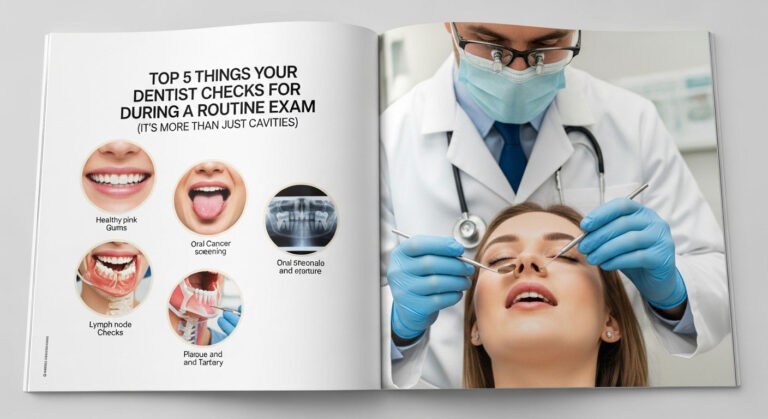
During your check-up, your dentist is performing a systematic review. Here are the five main things they are looking for:
1. The Health of Your Gums (Periodontal Screening)
Your gums are the foundation for your teeth. If this foundation isn’t healthy, the entire structure is at risk. Your dentist or hygienist will check for signs of gum disease (gingivitis and periodontitis) by looking for redness, swelling, or bleeding. They will also gently measure the small space between your teeth and gums, called periodontal pockets. Healthy pockets are shallow, while deeper pockets can be a sign of active gum disease.
2. Signs of Oral Cancer
This is one of the most important parts of your exam. Your dentist is a frontline defender in the early detection of oral cancer. They will visually inspect your tongue, cheeks, the roof and floor of your mouth, and your throat for any unusual red or white patches, sores that won’t heal, or other abnormalities. Early detection dramatically increases the success rate of treatment, making this screening potentially life-saving.
3. The Condition of Existing Dental Work
If you have fillings, crowns, bridges, or implants, your dentist will carefully examine them. Think of it like a mechanic checking the essential parts of your car. They look for cracks, chips, wear, or gaps around the edges of restorations where bacteria could leak in and cause decay underneath. Ensuring your existing dental work is sound prevents bigger problems down the road.
4. Your Bite and Jaw Joint (Occlusion & TMJ)
Your dentist will watch how your top and bottom teeth come together. This is called your bite, or occlusion. An improper bite can lead to excessive wear, cracked teeth, and muscle pain. They will also check your jaw joints (TMJ) for any clicking, popping, or difficulty opening and closing, which could indicate a TMJ disorder or issues with teeth grinding (bruxism).
5. Clues to Your Overall Health
The mouth often shows the first signs of health conditions elsewhere in the body. Your dentist can spot clues that may point to:
- Diabetes: Issues like slow healing, frequent infections, or severe gum disease can be related to undiagnosed diabetes.
- Acid Reflux (GERD): A specific pattern of enamel erosion on the inside surfaces of your teeth can be a telltale sign.
- Nutritional Deficiencies: Certain vitamin deficiencies can manifest as sores in the mouth or changes to the tongue.
- Osteoporosis: Significant bone loss in the jaw, visible on X-rays, can sometimes be linked to osteoporosis.
Finding the Right Professional for Your Preventive Care
A consistent relationship with a dental professional is key to effective preventive care. When a dentist sees you regularly, they establish a baseline for your oral health, making it much easier to spot subtle changes over time. Regular visits to your general dentist or a trusted dental clinic are the cornerstone of this process. If they discover a more complex issue, like a serious jaw problem or a non-healing lesion, they may refer you to a specialist like an oral surgeon for a more detailed evaluation and treatment.
The Expert Consensus on Regular Exams
You don’t have to take our word for it. Major health organizations consistently stress the importance of these visits. As the American Dental Association (ADA) notes, regular dental exams are crucial for detecting problems early, when they are often easier and less costly to treat. These check-ups are an essential part of your overall healthcare routine.
Take Control of Your Oral Health Today
Your routine dental check-up is much more than a search for cavities; it’s a comprehensive screening that protects your gums, jaw, and overall wellness. By understanding what dentists look for, you can better appreciate the value packed into every appointment.
Ready to schedule the most important appointment of your year? Use the Near Me Dental directory to find a top-rated dentist in your area and book your comprehensive oral health exam today.