Author: Near Me Dental Team
We are a team of talented individuals that take creativity to a new level. We are not just another creative agency, we dream with you. We’re really passionate about our work and we love to turn visions into reality. Our goal is not only to satisfy our clients’ goals, but to exceed them in every way.
During a routine dental visit, your dentist might mention the words, “I’m going to refer you to an oral surgeon.” This can sound intimidating, leaving you with questions about why you can’t be treated right here in their office. What does an oral surgeon do that a general dentist doesn’t? The truth is, this referral is a sign of excellent care. It means your dentist recognizes that your specific situation requires a specialist with advanced surgical training. This guide will cover the five most common reasons you might be referred to an oral surgeon, helping you understand the vital role they play in your dental health.
What is an Oral and Maxillofacial Surgeon?
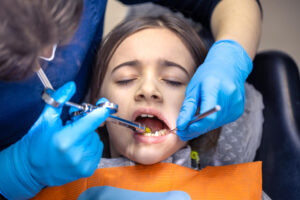
An oral and maxillofacial surgeon (OMS), commonly called an oral surgeon, is a dental specialist who has completed a rigorous 4-to-6-year hospital-based surgical residency after finishing dental school. Think of them as the bridge between dentistry and medicine. They are uniquely trained to perform complex surgical procedures involving the teeth, mouth, jaws, and face, and are also qualified to administer all levels of anesthesia, including general anesthesia.
Reason 1: Impacted Wisdom Teeth
This is by far the most common reason for a referral. Wisdom teeth often don’t have enough room to erupt properly and can become “impacted”—trapped in the jawbone or at an angle. Impacted teeth can cause pain, infection, and damage to adjacent teeth. An oral surgeon has the expertise to surgically remove them safely and efficiently, especially in complex cases.
Reason 2: Dental Implant Placement
While some general dentists place implants, the surgical placement of the implant post into the jawbone is a procedure that very often falls to an oral surgeon. They have in-depth knowledge of bone anatomy and are experts at ensuring the implant is placed in the optimal position for long-term success. They also perform any necessary bone grafting to prepare the site for the dental implant.
Reason 3: Corrective Jaw (Orthognathic) Surgery
When there is a significant misalignment of the jaws that cannot be corrected by orthodontics alone, corrective jaw surgery is required. This procedure is performed by an oral surgeon to improve a patient’s bite, breathing, and facial appearance. It’s often done in conjunction with an orthodontist to achieve the best possible result.
Reason 4: Facial Trauma and Reconstruction
In cases of accidents involving facial injuries, such as a fractured jaw or broken facial bones, an oral surgeon is the specialist called upon in the emergency room. They have the training to repair these complex injuries, including setting fractured jaws and cheekbones and managing severe facial lacerations.
Reason 5: Diagnosis and Treatment of Oral Pathologies
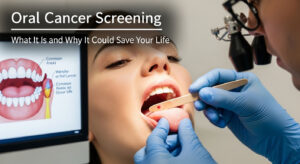
If your dentist discovers a suspicious lump, cyst, or lesion in your mouth during an exam, they will refer you to an oral surgeon for a biopsy. The surgeon will remove a small sample of the tissue, which is then sent to an oral pathologist for diagnosis. Oral surgeons are also the primary providers for the surgical treatment of oral cancers and other diseases of the mouth and jaw.
Your Dentist and Oral Surgeon: A Partnership for Your Health
It’s important to understand that a referral to an oral surgeon is not a sign of a problem with your general dentist. In fact, it’s the opposite. As the American Association of Oral and Maxillofacial Surgeons (AAOMS) emphasizes, this collaborative approach ensures you receive the highest standard of care from a specialist with the precise training needed for your condition. Your general dentist is the captain of your oral health team, and they know exactly when to call in an expert.
Conclusion: The Specialist for Complex Cases
An oral surgeon is an indispensable part of the dental care team, handling the most complex surgical procedures of the mouth and face. From routine wisdom tooth extractions to life-changing jaw surgery, their advanced training ensures you receive the safest and most effective treatment possible. If your dentist recommends a referral, you can be confident that you are being sent to the right expert for the job.
Need to find a qualified oral surgeon in your area? Use the Near Me Dental directory to search for board-certified specialists and take the next step in your treatment journey.