
Author: Dr Satish Pai
If your teenager needs orthodontic treatment, you have probably already heard the big question: clear braces or metal braces? It is one of the first things parents and teens weigh when an orthodontist recommends braces, and for good reason. The choice affects how your teen looks, how comfortable they feel, how carefully they need to maintain their braces, and yes, how much you spend.
There is no single right answer for every family, but understanding what each option actually involves makes the decision a lot clearer. Here is an honest breakdown.
What Are Metal Braces?
Metal braces are the traditional option most people picture when they think of orthodontic treatment. They consist of small metal brackets bonded to each tooth, connected by a thin archwire that is periodically tightened to gradually shift teeth into alignment.
Modern metal braces are smaller and smoother than the versions from a decade ago, which means less irritation to the inside of the mouth. They are also highly effective across a wide range of cases, from mild crowding to significant bite issues.
What Are Clear Braces?
Clear braces, sometimes called ceramic braces, work the same way as metal braces mechanically. The key difference is that the brackets are made from tooth-colored or clear ceramic material, making them far less noticeable against the teeth.
The wire connecting the brackets may still be metal (though some providers offer tooth-colored wires as well), but the overall appearance is significantly more discreet than traditional metal.
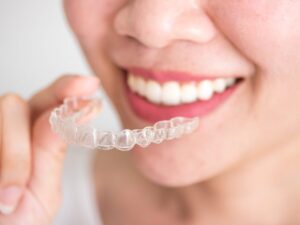
Clear braces are not the same as clear aligners like Invisalign. Aligners are removable plastic trays. Clear braces are fixed appliances, just like metal braces, but with a more subtle look.
How They Compare: The Key Factors
Appearance
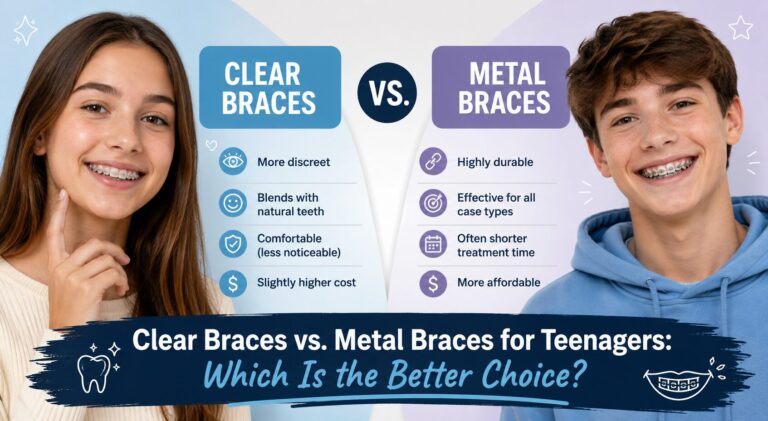
This is usually the deciding factor for teenagers. Metal braces are visible, and for many teens, that is a source of self-consciousness, especially during the socially sensitive high school years.
Clear ceramic braces blend in with the natural color of teeth, making them far less noticeable in photos, at school events, and during everyday interactions. For teenagers who are anxious about how braces will affect their appearance, this alone can make a meaningful difference to their confidence and comfort throughout treatment.
That said, ceramic brackets can pick up staining over time, particularly from coffee, tea, certain sauces, and dark-colored drinks. Teens who are not careful about what they eat and drink may find their clear braces start to look discolored before treatment ends.
Durability and Strength
Metal braces are the more durable option. They withstand the physical demands of active teenage life, including contact sports and enthusiastic eating, better than ceramic brackets do.
Ceramic brackets are more brittle and can chip or crack under impact. They are also larger in some cases, which can make them feel slightly bulkier. For teens who play high-contact sports, metal braces with a proper mouthguard may be the more practical choice.
Comfort
Neither type of braces is entirely comfortable, particularly in the first few days after placement or after each adjustment appointment. Both create pressure and may cause some soreness as teeth shift.
Clear ceramic brackets are generally smooth and can feel comfortable against the lips and cheeks once your teen adjusts. However, some patients find the brackets slightly larger than their metal counterparts, which can take longer to get used to. Metal brackets have become much smaller and rounder over the years, reducing friction and discomfort compared to older designs.
Oral Hygiene
Keeping braces clean is important regardless of which type your teen chooses. Food particles and plaque can collect around brackets and under wires, increasing the risk of cavities and gum issues if brushing and flossing are inconsistent.
With clear ceramic braces, there is an added consideration: the brackets and the elastic ties holding the wire in place can stain if oral hygiene is not thorough or if your teenager regularly consumes staining foods and drinks. Metal braces do not have the same staining concern.
For a teenager who is already diligent about dental hygiene, this is a minor issue. For one who needs regular reminders to brush properly, it is worth factoring in.
Treatment Effectiveness
Both clear and metal braces are equally effective at correcting most orthodontic issues. The mechanics are identical. For very complex cases involving significant bite correction or tooth movement, your orthodontist will guide you toward whichever option is best suited to the specific treatment plan.
Cost
Metal braces are typically the more affordable option. Clear ceramic braces usually cost more due to the materials involved. The exact difference varies depending on the provider and the complexity of treatment, so it is worth discussing pricing directly during your consultation.
Some dental insurance plans cover a portion of orthodontic treatment, and many practices offer payment plans to make the cost more manageable.
Questions to Ask Before You Decide
It helps to go into the decision with a few questions already in mind:
- How active is your teen? High-contact sports may tip the balance toward metal braces.
- How important is appearance to your teen? If self-confidence is a concern, clear braces may make the two or three years of treatment easier emotionally.
- How consistent is your teen with oral hygiene? Staining is a real consideration with ceramic brackets.
- What does the orthodontist recommend for this specific case? Complex movement or bite correction may favor one option over the other.
- What is your budget? Metal braces are generally the more cost-effective choice.
What Most Teenagers Actually Choose?
Many teenagers, when given the choice, lean toward clear braces because appearance matters to them. Parents, on the other hand, often favor metal braces for their durability and lower cost. The best outcome usually comes from having an honest conversation with your teen, listening to what matters most to them, and then weighing that against practical realities like budget and lifestyle.
It is also worth knowing that both options work. Whichever your family chooses, the result will be the same: a straighter, healthier smile at the end of treatment.
Talk to Your Dentist or Orthodontist
The right choice depends on your teenager’s specific orthodontic needs, their lifestyle, and your family’s priorities. A consultation with an experienced dental professional is the best next step. They can review your teen’s case, explain which options are appropriate for their specific situation, and help you make a fully informed decision.